
What Is Wafer Texturing and Why It Matters for Solar Efficiency
A polished silicon wafer straight out of the ingot-slicing process is a poor light absorber. Its flat, mirror-like surface reflects roughly 30–35% of incident sunlight before it ever reaches the p-n junction, which caps the amount of current a finished cell can generate. Wafer texturing solves this by etching a controlled micro-structure into the wafer surface so that light striking the cell is reflected sideways into the silicon instead of straight back out, giving it a second and third chance to be absorbed.
On monocrystalline wafers, this micro-structure typically takes the form of random upright pyramids a few microns tall. Combined with an anti-reflective coating applied later in the line, a well-textured surface can bring reflectance down into the low single digits, which translates directly into higher short-circuit current and higher cell efficiency. Texturing is therefore one of the first and most consequential wet-chemical steps in the entire cell production sequence.
How the Alkaline Texturing Process Works
Alkaline texturing exploits the fact that potassium hydroxide (KOH) or sodium hydroxide (NaOH) etches the (100) crystal plane of monocrystalline silicon far faster than the (111) plane. Left to react, this anisotropic etch naturally exposes a dense field of randomly distributed pyramids across the wafer surface.
In a production setting, wafers move through a sequence of alkaline etch, texturing-additive, and multi-stage rinse baths, typically at elevated temperature to control etch rate. Proprietary additive packages are used to promote nucleation of small, uniform pyramids rather than sparse, oversized ones, which improves both optical performance and downstream diffusion uniformity. Because the reaction is temperature- and concentration-sensitive, bath stability and precise dosing are what separate a texturing line that holds tight reflectance specs from one that produces wafer-to-wafer variation.
Where Alkaline Texturing Sits in the TOPCon Process Flow
For N-type TOPCon cells, alkaline texturing is one of the first wet stations the wafer sees, immediately after saw-damage removal and ahead of boron diffusion. Getting a uniform, well-controlled pyramid structure at this stage matters beyond optics: an inconsistent textured surface can lead to uneven diffusion depth and localized recombination losses further down the line, which are far more expensive to trace and correct once the cell has moved through diffusion, deposition, and metallization.
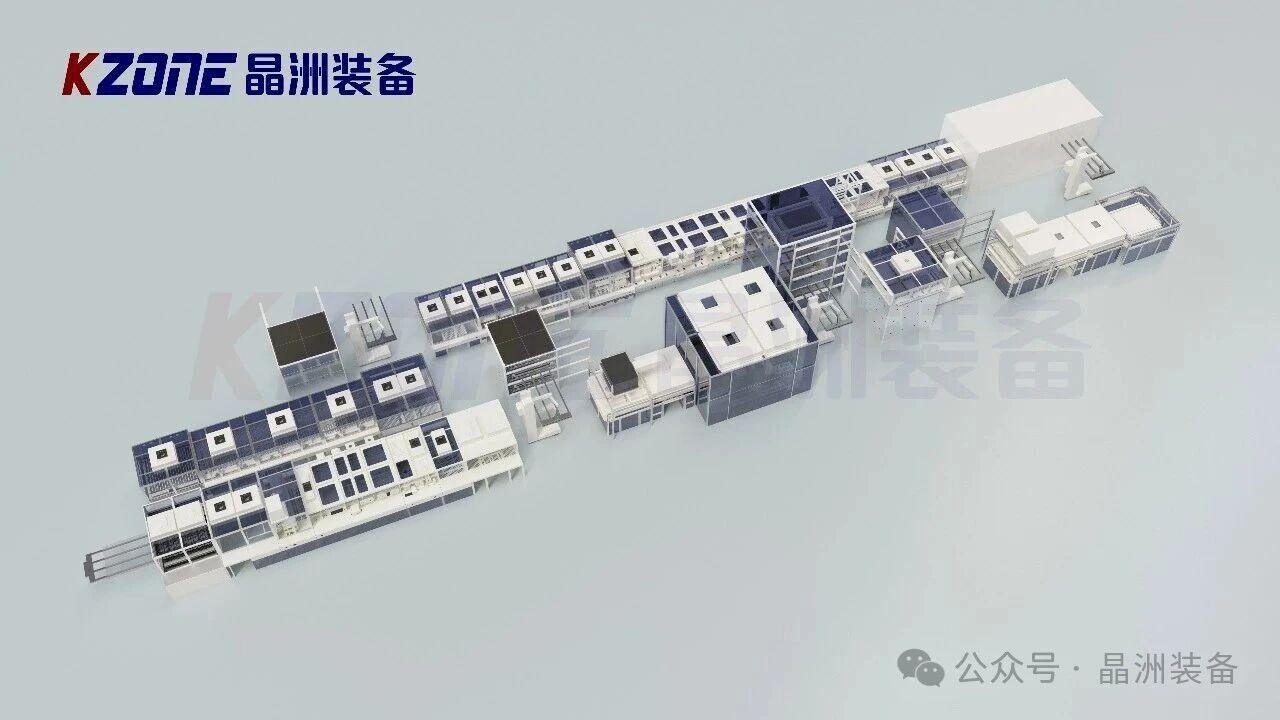
This is also why texturing equipment is rarely evaluated in isolation. It is designed and specified as the entry stage of an integrated wet process line that continues through boron diffusion protection, BSG removal, alkaline polishing, and RCA cleaning — see the full TOPCon/PERC wet process solution for how these stages connect.
Equipment Considerations: What to Look for in a Texturing Cleaner
A few variables tend to separate texturing cleaners that hold spec at volume from those that don't:
1. Bath uniformity and temperature control across the full tank width, since local hot or cold spots show up directly as reflectance variation across the wafer.
2. Chemical dosing precision and additive replenishment, which determine how consistently small, uniform pyramids form batch after batch.
3. Throughput and cassette or chain-type transport design that matches wafer size (182mm, 210mm) and line takt time without introducing wafer breakage.
4. Rinse and drying stages downstream of the etch bath, which prevent staining and carry-over into the diffusion furnace.
How Kzone's Texturing Cleaner Supports High-Volume Alkaline Texturing Lines
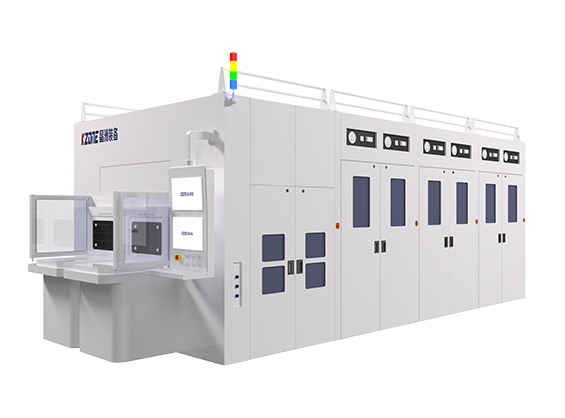
Kzone's Texturing Cleaner is built as the front-end stage of Kzone's complete wet process lines for TOPCon cell production. Kzone's integrated 1GW TOPCon lines — combining chain-type single-sided etching at up to 5.0+ meters per minute with six-cassette alkaline polishing and RCA cleaning — are engineered for a total line capacity above 18,000 182mm wafers per hour, giving OEM cell manufacturers a texturing stage that is designed to keep pace with the rest of a high-volume production line rather than becoming its bottleneck.
Conclusion
Wafer texturing is where cell efficiency starts. Alkaline texturing gives monocrystalline and N-type TOPCon wafers the uniform pyramid structure they need for low reflectance and consistent downstream diffusion, but only if the equipment can hold bath chemistry, temperature, and dosing steady at production volume. To see how a texturing stage fits into a complete wet process line, explore Kzone's PV Industry Solutions or contact Kzone's engineering team to discuss your line's throughput and wafer format requirements.