
Single-side oxide etching removes a doped glass or oxide layer from one face of a wafer while leaving the opposite face fully intact. It's a defining requirement of TOPCon cell manufacturing, where the front and rear surfaces carry different layer stacks by the time the wafer reaches this stage — the rear already has its polysilicon and passivation structure in place, while the front still carries the boron-doped glass left over from diffusion. Etching both sides equally, as older cell architectures could sometimes tolerate, isn't an option here: the rear structure has to come through untouched.
TOPCon's efficiency advantage comes largely from its passivated rear contact — the thin tunnel oxide and doped polysilicon layer that reduces recombination at the rear surface. If an etch step designed to clear BSG from the front wraps around to the rear, even slightly, it can thin or damage that polysilicon passivation stack. The result shows up as reduced open-circuit voltage and, in more severe cases, localized shunting that's caught at cell test but hard to trace back to a single process step. This is why single-side oxide etching is treated as a precision requirement rather than a simple throughput target — the tool has to guarantee front-only etching at full line speed, not just on average.
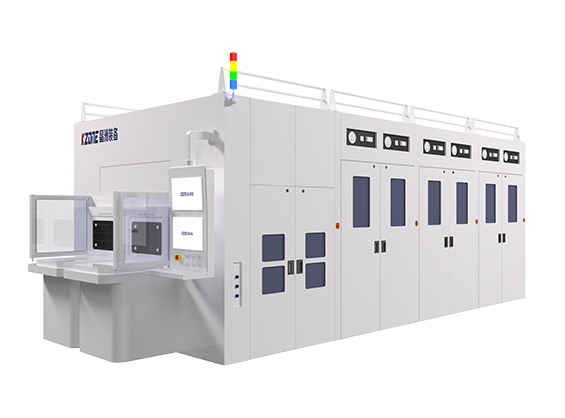
Chain-type inline etchers achieve single-side selectivity by transporting wafers horizontally on rollers, with the etching chemistry applied as a controlled liquid film to the top (front) surface only, while the underside stays dry or protected. This geometry naturally limits the etchant to one face, but it depends on precise roller design and liquid film control to avoid the etchant creeping around the wafer edge or dripping through gaps in the transport rollers.
The alternative — batch immersion with a physical or water-film mask protecting one side — can also achieve single-side selectivity, but chain-type inline systems generally offer higher throughput per unit floor space, since wafers move continuously through the line rather than being loaded and unloaded in cassette batches.
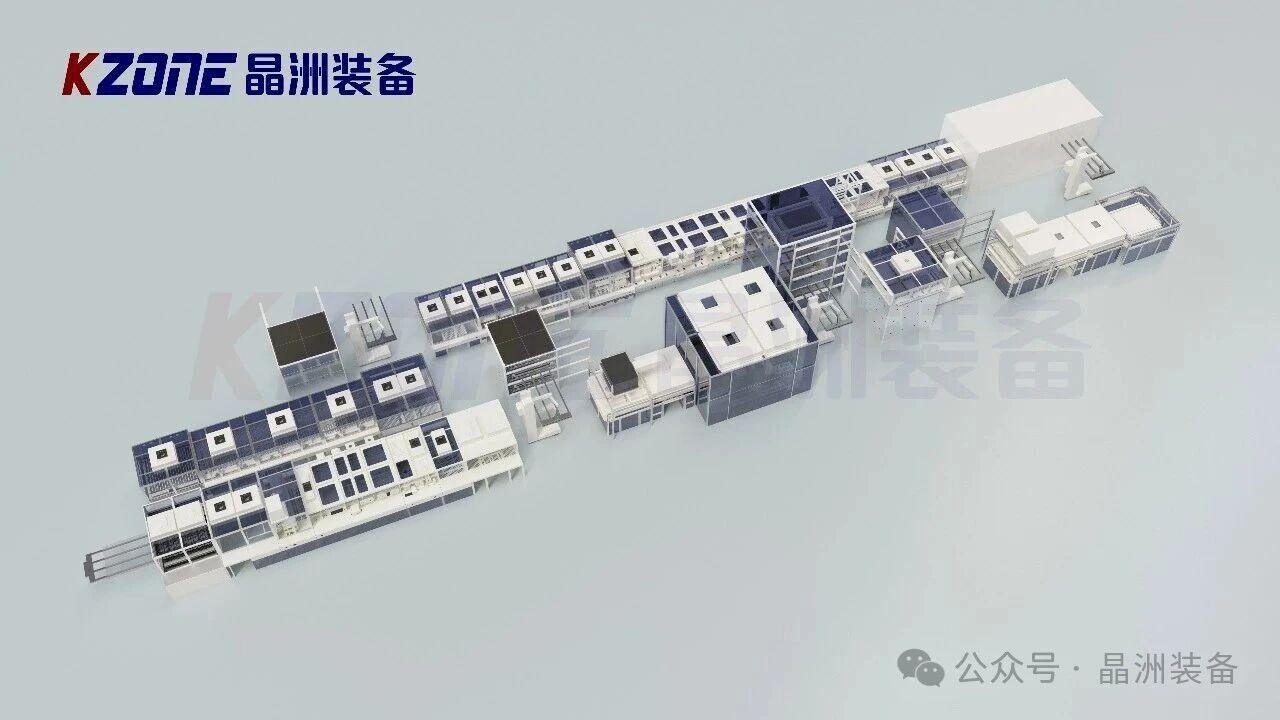
Single-side oxide etching doesn't operate as an isolated station. Depending on the cell architecture, it's specified alongside PSG Removal Equipment for phosphorus-doped glass on the rear, and feeds directly into alkaline polishing once the glass layers are cleared. Kzone's integrated TOPCon lines pair chain-type single-sided etching running at 5.0+ meters per minute with six-cassette alkaline polishing and RCA cleaning downstream, so the etch stage is engineered to match the throughput of the rest of the TOPCon/PERC wet process solution rather than becoming a bottleneck feeding into it.
Single-side oxide etching is where TOPCon's efficiency gains are protected or lost — get the front/rear selectivity right and the rear passivation stack stays intact through the rest of the line; get it wrong and the damage often isn't visible until final cell test. To see how single-sided etching fits into a full production line, explore Kzone's PV Industry Solutions or contact Kzone's engineering team to discuss line speed and selectivity requirements for your cell format.