
In modern photovoltaic manufacturing, producing high-efficiency solar cells requires precise control over every microscopic feature on the wafer surface. One often-overlooked but critical step is edge isolation. Without proper edge isolation, even a perfectly diffused and passivated solar cell can suffer from severe electrical losses. This article explains why edge isolation is needed, how it solves the problem of edge wraparound, and the main methods used in production today.
During diffusion processes such as boron diffusion for TOPCon cells or phosphorus diffusion for PERC cells, dopant atoms do not remain confined to a single side of the wafer. Because silicon wafers have exposed edges, the doping gas can wrap around the perimeter and create unintended conductive regions on the opposite surface. This phenomenon is known as edge wraparound.
Edge wraparound creates a conductive path between the front and rear junctions of the cell. When the cell is operated under illumination, electrons and holes can travel through this unintended path instead of being collected by the front and rear metal contacts. The result is shunting, which reduces open-circuit voltage, fill factor, and overall conversion efficiency. In severe cases, edge wraparound can also cause local hotspots and long-term reliability problems.
Edge isolation is the process of removing or neutralizing this unwanted conductive layer along the wafer edge. By creating a clean electrical separation between the front and rear sides, edge isolation ensures that charge carriers are collected only through the intended contacts, preserving cell performance and preventing leakage currents.
There are three primary approaches to edge isolation in solar cell production: wet chemical processing, laser ablation, and plasma etching.
Wet chemical edge isolation uses acid or alkaline solutions to etch away the doped layer along the wafer edge. This method is widely used because it provides uniform material removal across the edge and can be integrated into existing wet bench process lines. It is particularly effective for treating large batches of wafers and is compatible with both PERC and TOPCon architectures. However, the process must be carefully controlled to avoid over-etching or under-etching, both of which can affect cell performance.
Laser edge isolation uses a focused laser beam to ablate the doped material along the wafer perimeter. This method offers high precision and can be applied selectively to specific regions. Laser processing is dry and fast, making it attractive for high-throughput lines. The downside is that laser damage can introduce defects into the silicon lattice if the energy density is not optimized, potentially leading to recombination losses near the edge.
Plasma edge isolation uses reactive ion etching to remove the unwanted doped layer. This method provides excellent process control and can achieve very fine edge profiles. Plasma etching is often used in advanced cell architectures where chemical and laser methods may not provide sufficient selectivity. The main challenges are higher equipment cost and slower throughput compared to wet chemical processing.
In TOPCon manufacturing, edge isolation is typically performed after boron diffusion and before or after the deposition of passivation and contact layers, depending on the specific process flow. Because TOPCon cells rely on a highly passivated tunnel oxide and polysilicon layer on the rear side, any wraparound of the front-side boron emitter onto the rear edge can compromise the rear junction quality and reduce passivation effectiveness.
The exact placement of edge isolation in the process sequence affects both equipment selection and process integration. If performed too early, the edge may become re-contaminated during subsequent high-temperature steps. If performed too late, it may be difficult to remove material that is buried under passivation or contact layers. Most TOPCon lines integrate edge isolation immediately after diffusion and surface cleaning, allowing the process to benefit from the existing wet chemistry infrastructure while protecting downstream layers from shunting defects.
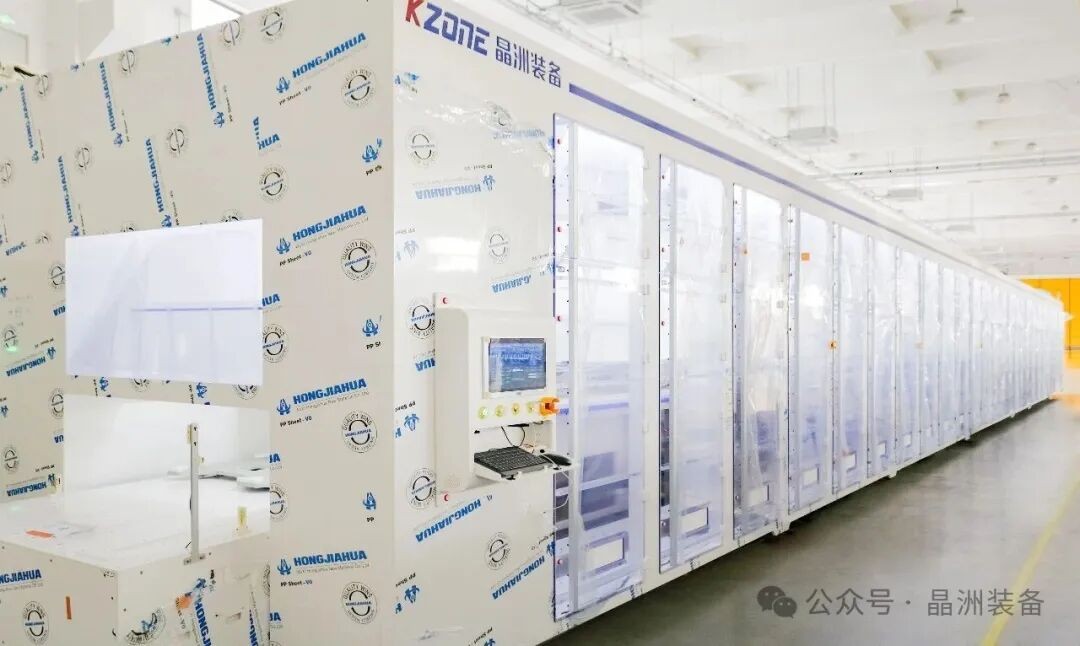
Achieving consistent edge isolation requires equipment that can maintain uniform chemical distribution, precise timing, and minimal handling damage. Key equipment considerations include bath temperature control, chemical concentration monitoring, wafer spacing, rinse quality, and drying performance.
For wet chemical systems, the etch bath must provide uniform contact between the etchant and the wafer edges without damaging the front or rear surfaces. Overflow designs, ultrasonic agitation, and robotic wafer handling all contribute to repeatable results. In-line conductivity and pH monitoring help maintain bath stability and reduce process drift.
For laser and plasma systems, beam alignment, power stability, and chamber uniformity are critical. Advanced systems incorporate optical inspection to verify edge isolation width and detect residual conductive material. Whether wet, laser, or plasma, the best edge isolation equipment is the one that integrates cleanly with the overall cell process and provides measurable, repeatable shunt resistance improvement.
Edge isolation may be a small step in the solar cell manufacturing sequence, but its impact on cell efficiency and yield is significant. By removing the conductive path created by edge wraparound, edge isolation protects the electrical integrity of the front and rear junctions. Manufacturers choosing between wet chemical, laser, and plasma methods should consider throughput, cost, compatibility, and the specific requirements of their cell architecture. For TOPCon production lines in particular, robust edge isolation is essential for reaching the highest efficiency targets.
Why does edge wraparound cause shunting in solar cells?
Edge wraparound creates a conductive doped layer that connects the front and rear sides of the wafer, allowing current to bypass the intended contacts and reducing efficiency.
Which edge isolation method is best for TOPCon cells?
Wet chemical edge isolation is commonly used for TOPCon because it integrates well with wet bench process lines and provides uniform material removal. Laser and plasma methods are also used for specific applications requiring high precision.
How do manufacturers verify edge isolation quality?
Quality is typically verified using shunt resistance measurements, electroluminescence imaging, and inline optical inspection to confirm complete removal of the unwanted edge layer.