
RCA cleaning is a standard two-step wet chemical cleaning sequence originally developed at RCA Laboratories in the late 1960s for semiconductor wafer processing. It's since become the de facto reference cleaning method across silicon processing industries, including solar cell manufacturing, precisely because it addresses two very different contamination types — particulate/organic residue and metallic contamination — with two chemically distinct steps rather than trying to remove everything in a single bath.
In solar cell production, RCA-style cleaning is used as the final wet chemical checkpoint before the wafer moves into passivation deposition, where surface cleanliness has an outsized effect on how well the passivation layer bonds and performs.
RCA cleaning is sequenced after alkaline polishing rather than before it, and the order matters. Polishing itself is a chemical etch step that removes a thin layer of material to smooth the wafer surface — running RCA cleaning first would mean cleaning a surface that's about to be etched again, and any particulate generated during the polishing step would simply recontaminate the wafer afterward. Cleaning after polishing ensures the wafer reaches the passivation stage in the cleanest, most surface-stable condition possible, without an etch step scheduled after it to disturb that cleanliness.
RCA cleaning is really two sequential sub-steps, each targeting a different contamination type:
● SC-1 (Standard Clean 1) uses an ammonium hydroxide and hydrogen peroxide solution to remove particulate matter and organic residue from the wafer surface. It works partly through a mild oxidative etch that lifts particles away from the surface as it proceeds.
● SC-2 (Standard Clean 2) uses a hydrochloric acid and hydrogen peroxide solution to remove metallic contamination — trace metal ions that SC-1 doesn't effectively address, and that can otherwise diffuse into the silicon and create recombination centers during subsequent thermal steps.
Running both steps in sequence, rather than substituting one for the other, is what makes RCA cleaning effective across the full range of contamination a wafer accumulates from earlier processing stages.
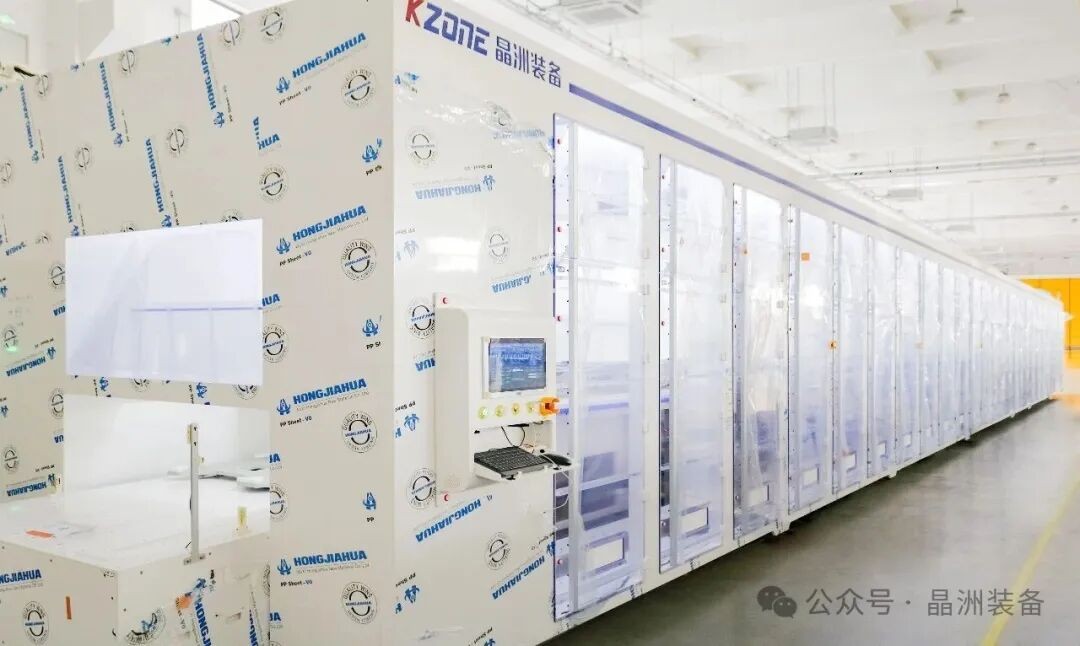
Because polishing and RCA cleaning both use wet chemical baths with similarly tight dwell-time requirements, they're commonly combined into a single multi-cassette system rather than run as separate standalone tools. Kzone's Alkaline Polishing Cleaner is built as a six-cassette alkaline polishing and RCA cleaning system, so wafers move from polishing directly into SC-1/SC-2 style cleaning without being handled between separate batch tools — reducing both cycle time and the contamination risk that comes with extra wafer handling.
RCA cleaning's two-step SC-1/SC-2 sequence remains the reference standard for wafer cleanliness because it's built to address two distinct contamination types rather than one. Positioned after polishing and integrated into the same multi-cassette system, it gives the wafer its cleanest possible surface right before passivation. To see how RCA cleaning fits into a complete line, explore Kzone's TOPCon/PERC Solution.